The Force the UN Counts Is Not Most of the Force in Haiti
About 2,500 Salvadoran troops are in Haiti, but the UN says only about 200 serve under the Gang Suppression Force mandate. The Council is renewing a force that controls the shared enablers, not the bulk of the foreign troops.

Most of the foreign troops in Haiti are not in the force the Security Council authorized. El Salvador has about 2,500 troops in the country. The UN counted 1,563 uniformed personnel in the Gang Suppression Force (GSF) as of 12 October. On 3 November the UN spokesman said only about 200 of the Salvadorans serve under the GSF mandate and its monitoring mechanisms, according to Streamline Feed. That is about 8% of the Salvadoran contingent. I have not checked the figure against the noon-briefing transcript, so treat it as reported rather than confirmed at source.
The two counts can be combined with some care. They come from different dates, and the combination assumes the 200 mandated Salvadorans are already inside the GSF total. On that basis roughly 2,300 of about 3,860 foreign troops, nearly 60%, operate outside the mandate. That is an estimate, not a count.
Compare these numbers with the Council's ceiling of 5,550. The Salvadoran contingent alone equals about 45% of the authorized number. The mandated force, at 1,563, stands at about 28% of its ceiling. Washington and Port-au-Prince present the GSF as the vehicle for the anti-gang offensive. On these numbers, most of the foreign manpower in that offensive sits outside the force the Council votes on.
What does the Council actually control?
It does not control the offensive. It controls a ceiling, a monitoring mechanism and a logistics contract. Resolution 2793 gave the UN Support Office the job of supplying the GSF with fuel, food, water, accommodation and medical evacuation, as the International Crisis Group sets out. These are the shared enablers.
They matter because most of the work is dense urban movement through a few chokepoints: the approaches around Croix-des-Bouquets east of the capital, the Varreux fuel terminal, and the national routes into Port-au-Prince. Whoever can fuel a vehicle, evacuate a casualty and clear the airspace over a neighborhood has real say over operations there.
The Salvadoran units, meanwhile, mostly operate outside that structure. The Council is renewing oversight of the minority of foreign troops its own paperwork covers.
Do Salvadoran units draw on the shared enablers?
The public record does not say, and the argument should not rest on a guess. Resolution 2793 tasks the Support Office with supporting the GSF. Troops outside the mandate presumably rely on bilateral supply, the Haitian state or other partners. Nobody has published what they take from the UN system, if anything, whether medevac slots, fuel, or airspace and ISR deconfliction channels. That gap is the first thing the Council should close.
The shared battlespace, by contrast, is documented. The Haitian Times reported that Nayib Bukele defended the operations and publicly criticized a US diplomat who had raised coordination concerns, following gunfire at the US Embassy. Salvadoran operations have to be deconflicted with the GSF, the Haitian National Police and the Haitian army. Aircraft, drones, police convoys, private contractors and ground columns share a metropolitan area of several million people and a handful of roads. In that setting, the deconfliction picture is the real chokepoint, and the mandated force sits at its center.
Civilian casualties make this urgent. Human Rights Watch documented earlier drone strikes in Haiti and the danger they posed to residents. That reporting does not attribute those strikes to Salvadoran units, and I will not borrow its numbers for them. The concern runs the other way. Because Salvadoran operations sit outside civilian-harm tracking, no one can say publicly how many people they have killed, who was present at a target, or whether a strike hit what it was aimed at. A commander cannot learn from, or defend, a record that does not exist. The HNP and GSF units on the same ground bear the consequences of strikes they cannot assess.
What bargain can a Council delegation write?
The operative language needs two sentences:
- Decides that access to United Nations Support Office medical evacuation, fuel, and airspace and ISR deconfliction channels shall be extended to non-mandated forces operating in Haiti only upon their written enrollment in the GSF reporting and civilian-harm tracking mechanism.
- Requests the Secretary-General to report within 60 days on which enablers non-mandated forces currently use and on what terms.
The second sentence does more work than it appears to. It turns an unknown into a number before anyone is asked to give anything up. The first then offers Salvadoran units something useful and attaches a reporting duty to it.
The cost is modest for a contingent of this size. As a rough illustration, not a UN figure, assume full life support at $30 to $40 per soldier per day. That is more than the proposal actually offers. For 2,300 troops it would come to about $25 million to $34 million a year, before fuel and medevac. A small civilian-harm tracking cell might add a few million dollars. Even if the real figures were double, the total would be cheap next to a mass-casualty error in a crowded neighborhood.
The bargain should be written as a service contract, not a favor. The corridor_norms_sla instrument provides a template: published response times for deconfliction requests, medevac turnaround targets, reporting deadlines and a named liaison on each side. Salvadoran commanders would get guaranteed service in exchange for visibility. For Washington, the burden-sharing case is simple. It currently backs a mandate that covers a minority of foreign troops and spends political capital explaining away the rest. Pricing the trade now costs less than discovering its price after a bad strike.
Why might this fail?
The strongest objection is that the leverage may be thin. If Salvadoran units supply themselves bilaterally and take nothing from the UN system, making UN enablers conditional achieves nothing. They can decline to enroll, and Bukele has already shown he will push back against outside pressure in public. Worse, pressure from the Council could lead them to share less deconfliction data, which raises the risk of fire between friendly forces in airspace and streets already crowded with aircraft and convoys.
That risk is real, and it is why the 60-day report comes first. If the dependence is negligible, the Council should say so and stop treating the Salvadoran troops as part of the force it oversees. It should then plan GSF force generation around the actual number. A force at 28% of its ceiling does not become more capable because a larger foreign contingent operates beside it. If the dependence is real, the Council holds a tool it has not yet used. Either way, the mandated force is where the deconfliction picture comes together. Access to that picture is something the Council can grant to units that report and withhold from units that do not.
The Council will renew the force it can count. It has not yet decided whether to count the larger one.
Primary Sources & PeaceBot Model Citations
Defines uptime targets and conduct norms for critical corridors with penalties for breaches.
- [1]Streamline Feed (citing UN spokesman, 3 Nov 2026)
- [3]International Crisis Group
- [5]Human Rights Watch
Interactive Policy Simulators & Decision-Support Portal
Explore STIMPACK's interactive decision-support suite built for diplomats, congressional staff, and researchers—combining real-time open-source intelligence with quantitative security, territorial, and coalition stability simulators:
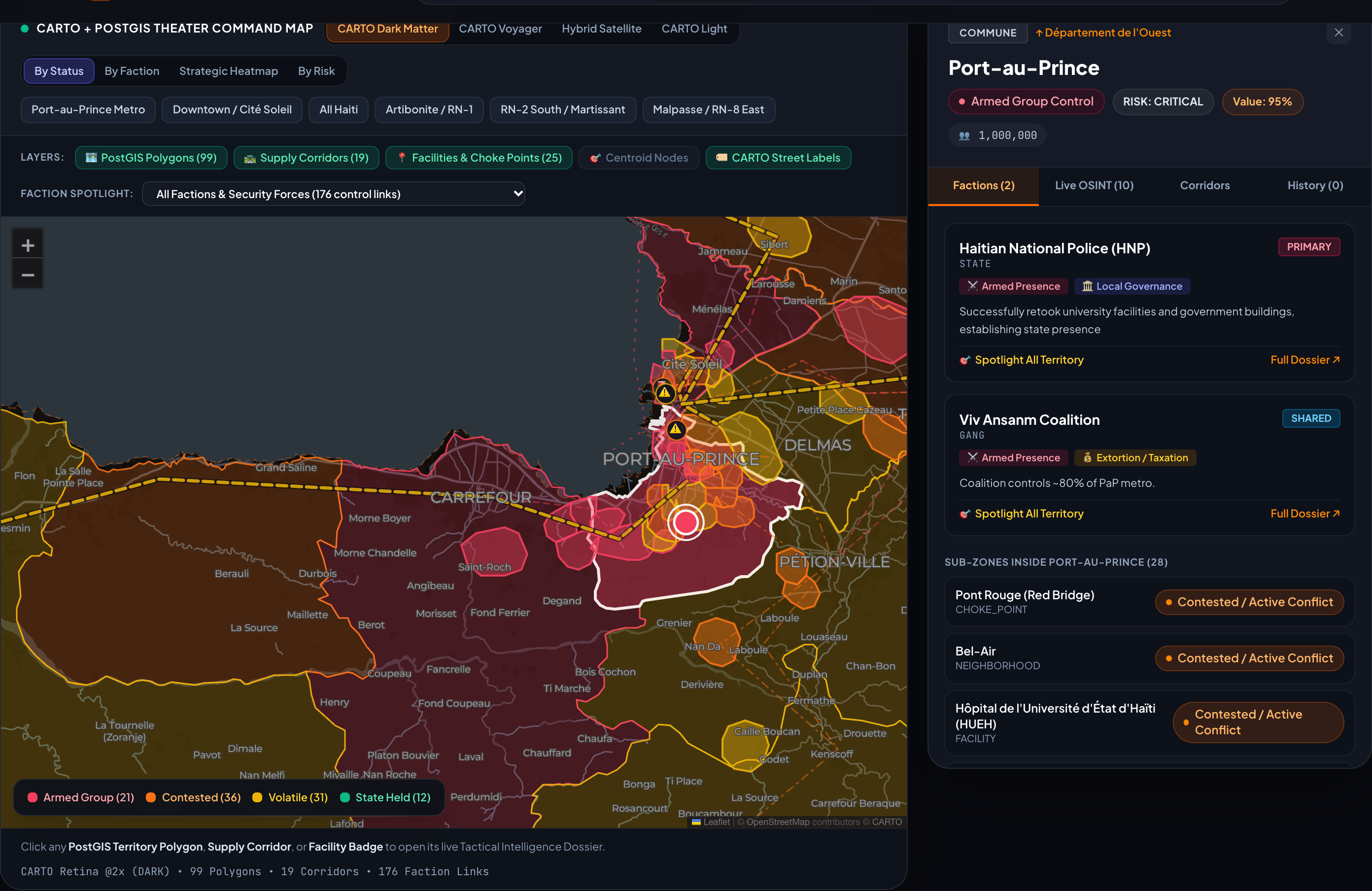
Interactive geospatial control across 100 neighborhoods & highway choke-points (`/monitor/map`).
Force posture & fiscal recovery models (`/security-simulator`, `/tool`, `/tool2`).
Policy Explorer, Coalition Stability Calculator & Force-Directed Network (`/instruments`, `/coalitions`, `/power-map`).
109-page peer-reviewed Haiti Working Group framework & statutory annexes (`reports.stimpack.org`).
All dispatches, actor dossiers, and quantitative models are autonomously generated by STIMPACK AI systems from open-source reporting.
Subscribe to Automated AI Dispatches
Receive automated open-source intelligence digests and Working Group report releases directly in your inbox.
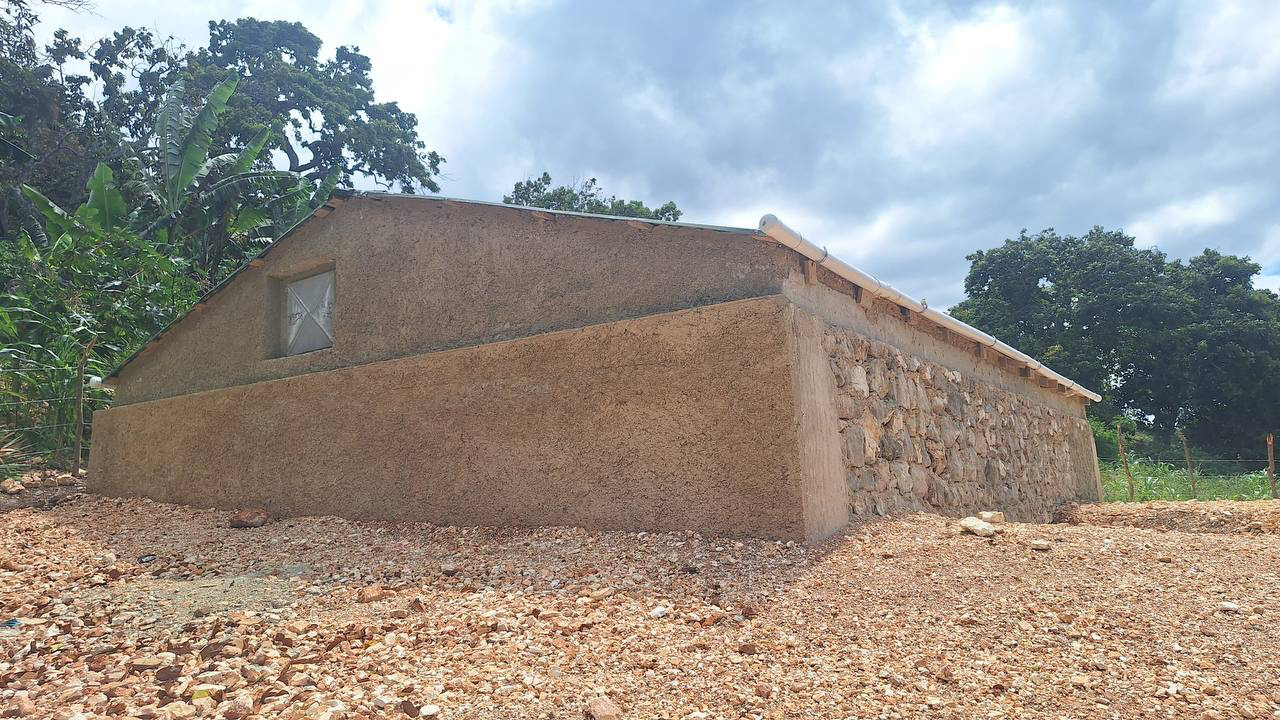
See How Direct, Milestone-Verified Local Infrastructure Works on the Ground in Boucan Ferdinand
Our policy papers argue that local recovery funds should bypass discretionary political pools in the capital and flow directly against verified physical milestones. In the border village of Boucan Ferdinand, 250 core residents (~50 households, 1,200+ regional corridor reach) cut the mountain access road by hand, planted 70,000 nursery trees, and built a reinforced 356,600-gallon stone-and-concrete rainwater reservoir.