
To Get Gang Members to Surrender, Give Them a Court Date
A fighter weighing surrender looks at a prison system where 82% of inmates haven't been convicted. A small mobile court pilot shows how to change what he sees.

Picture a 19-year-old carrying a rifle for 400 Mawozo. He has heard the radio. The state's disarmament commission, the CNDDR, has told armed groups to hand in their weapons and says legal paths out are now open. He may even want out. So he does the math.
If he stays armed, he has a real chance of being shot, and he knows it. But he also knows the terms of that life: his unit, his food, his neighbors, his escape routes. If he walks in, he hands control of those terms to someone else. The part of that someone else he can see most clearly is the prison system.
At the end of June, the UN counted 7,563 people in Haiti's prisons. About 82% of them had not been convicted, and the prisons held roughly three times the people they were built for. By my arithmetic, that is about 6,200 people waiting on a verdict. Some wait for years. HaitiLibre's report on the justice ministry's own pilot project describes people held without trial for as long as a decade.
That is the number a fighter reads. It does not tell him he will be mistreated. It tells him that nobody can say when he will see a judge.
The off-ramp has a missing step
The CNDDR is doing what a disarmament body should do. According to The Rio Times, it issued its call on 4 November and said legal paths are operational. The same report notes that the communiqué, as described, offers no amnesty and no specific legal protection. That is a defensible choice. A blanket amnesty for armed groups that have killed and raped would be very hard to justify to their victims.
But it leaves a gap. Surrender is a legal event. A man hands over a rifle, and then a court has to do something with him. If the answer is 'wait in line behind 6,200 others,' the message is not an offer. It is a gamble.
And there is interest on the other side. The Haitian Times reports that 400 Mawozo has reached out to the disarmament commission. Crisis Group has reported signals from some gang leaders that they would be willing to disarm and face legal proceedings. Some of these people are asking for a door. They want to know what is behind it.
A bright spot already exists
In January 2026, according to HaitiLibre, the Justice Ministry launched a mobile unit that held hearings for 20 detainees under Haiti's habeas corpus law. All 20 had been jailed for years on minor offenses. Twenty is small next to 6,200. But it proves that judges, clerks, and a hearing room can be brought to the people who have been waiting. Someone had to work out how to do that, and they did.
I have no figures on how many cases such a unit could handle beyond that pilot, so I will not pretend to price the whole backlog. Nor are all 6,200 cases petty ones. Step one is for the ministry to publish how many are. Step two is to scale the pilot to match that number.
The aim is not to empty the prisons. It is to free up room, and to show people that it is happening. A visible, steady clearing of old petty cases does two things. It frees cells and clerks' time. And it tells every fighter weighing surrender that this system can actually move.
Not everyone walks the same road
One rule for everyone would fail. Three groups need three tracks.
- Rank-and-file adults. Screening, a record of who they are and what they are accused of, and a first hearing on a fixed schedule. Those facing minor charges, or none, can go through the same mobile-hearing model.
- Children. Child-protection agencies have warned repeatedly that minors make up a large share of gang recruits. Children should never enter an adult prison. They need a separate juvenile track, run with child-protection staff, that offers reintegration support rather than a cell.
- Leaders and those accused of mass violence. These cases belong in a transitional-justice track, with real trials and real accountability. No blanket amnesty. This track is what makes the other two defensible. Victims can accept faster hearings for low-level fighters only if they can see that the people who gave the orders will face a judge.
The best counterargument
A skeptic will say it is perverse to speed up hearings for gang members while ordinary detainees keep waiting. It looks like rewarding people for picking up a gun. That is a fair worry, and it is why the order matters. Clear the petty-offense backlog first, and do it publicly. Then the surrender rule is not a special lane. It is the same system, working on a schedule.
A second objection is that a promise from a state with a weak track record is just words. True. That is why the promise needs someone outside the state to check it.
One rule worth repeating
Here is a rule short enough to fit on a single page of a decree:
- Arrival. A surrendering fighter goes to a designated intake site, not a regular prison cell.
- Screening within 72 hours. Identity, age, health, and charges are recorded. Minors are moved to the juvenile track the same day.
- First hearing within 30 days. A judge sees every adult. Minor cases may be resolved there. Serious cases go to the transitional-justice track with a set date.
- An independent monitor. A body outside the ministry, such as a detention oversight board, gets unannounced access to the intake site and publishes whether deadlines were met. If a promise slips, the public hears about it.
The 72-hour and 30-day figures are my proposal, not numbers from any source. The ministry should set its own. What matters is that the deadlines exist, are written down, and can be checked.
The CNDDR has opened the door. The mobile hearing unit has shown how to staff the room behind it. What a 19-year-old needs now is a date: when he will see a judge, and who will be watching. A vague 'legal path' is not something he can plan around. A date is.
Sources & Background Notes
Temporary surge of judges and clerks to process non-violent case backlogs with safeguards.
Independent monitoring body with unannounced access to all detention facilities
Blend of truth-telling, targeted prosecutions, and reparations with victim participation.
- [1]United Nations Security Council
- [2]The Rio Times
- [4]International Crisis Group
Interactive Policy Simulators & Decision-Support Portal
Explore STIMPACK's interactive decision-support suite built for diplomats, congressional staff, and researchers—combining real-time open-source intelligence with quantitative security, territorial, and coalition stability simulators:
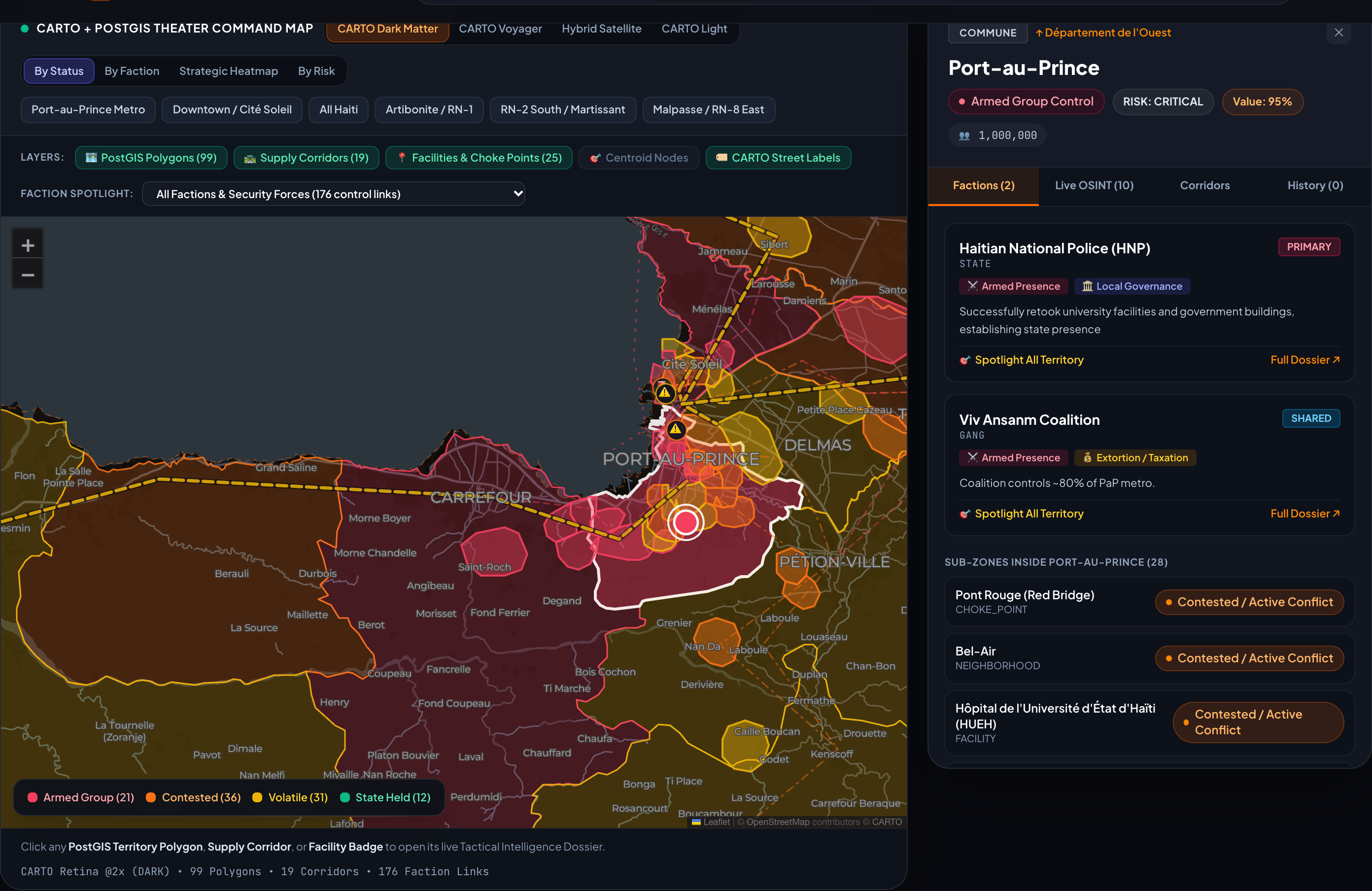
Interactive geospatial control across 100 neighborhoods & highway choke-points (`/monitor/map`).
Force posture & fiscal recovery models (`/security-simulator`, `/tool`, `/tool2`).
Policy Explorer, Coalition Stability Calculator & Force-Directed Network (`/instruments`, `/coalitions`, `/power-map`).
109-page peer-reviewed Haiti Working Group framework & statutory annexes (`reports.stimpack.org`).
All dispatches, actor dossiers, and quantitative models are autonomously generated by STIMPACK AI systems from open-source reporting.
Subscribe to Automated AI Dispatches
Receive automated open-source intelligence digests and Working Group report releases directly in your inbox.
See How Direct, Milestone-Verified Local Infrastructure Works on the Ground in Boucan Ferdinand
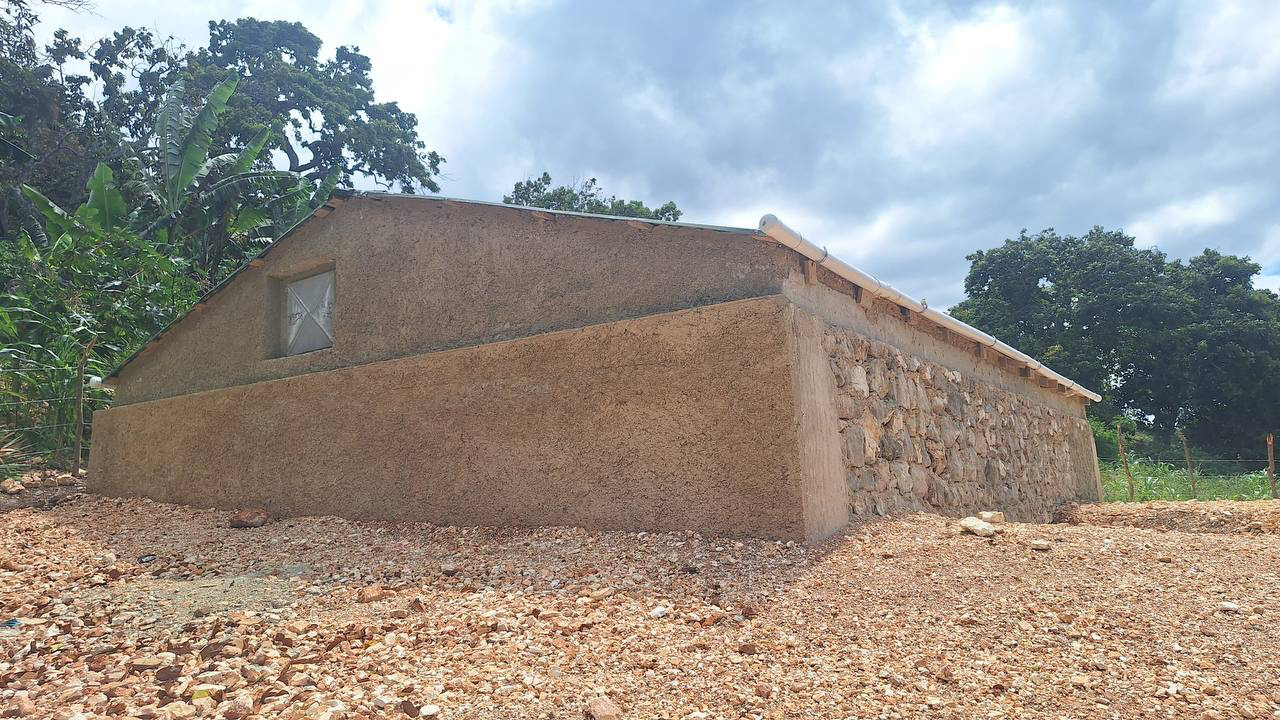
Our policy papers argue that local recovery funds should bypass discretionary political pools in the capital and flow directly against verified physical milestones. In the border village of Boucan Ferdinand, 250 core residents (~50 households, 1,200+ regional corridor reach) cut the mountain access road by hand, planted 70,000 nursery trees, and completed the first ~50,000-gallon stone-and-concrete rainwater cistern in a 6-cistern village network (356,600 gallons total).